Showing posts with label Alert. Show all posts

Wednesday, September 18, 2019

[Tanzania]: Minister promises to pay cashew farmers before the next season takes off

September 09, 2019

In Summary: The government has on Monday, September 09, 2019 told the Parliament in Dodoma that all cashew farmers will be paid their outstanding dues before commencement of the next season.


Deputy Minister for Agriculture Mr Omary Mgumba
Deputy Minister for Agriculture Mr Omary Mgumba 

Dodoma. Deputy Minister for Agriculture Mr Omary Mgumba has allayed fears of unpaid cashew nut farmers saying their payment will be cleared before the start of next season. 

Mr Mgumba was responding to a supplementary question posed by Mr Cecil Mwambe (Ndanda-Chadema) who said there was uncertainty among cashew farmers due to payment delays. 

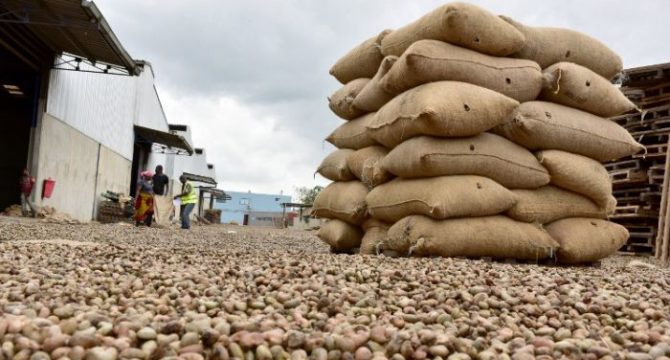
The government announced that it would buy all cashew nuts in the current season due to a crisis after traders failed to meet the indicative prices. 

"There is an uncertainty among cashew farmers and the next season is fast approaching. 

When will the government pay farmers’ arrears," asked Mr Mwambe without mentioning the number of farmers who are yet to be paid. 

Mr Mgumba said almost everything was ready and payment would be cleared before the next season starts. 

"We are waiting for the cashew bought in the first phase to be exported and as we speak, it's done. 

So, the remaining unpaid farmers will be cleared before the start of the next season," said Mr Mgumba.

The ministry of agriculture is this week set to announce the indicative prices for the 2019 season , promising not to interfere in the buying of the cashews this year. 

By Alawi Masare 

Wednesday, August 21, 2019

[Zambia]: ETG messes up $45 million cashew nut loan in Barotseland

August 21, 2019

The poor quality, cheap cashew nut seedling which the Export Trading Group (ETG) imported from East Africa and imposed on the soil in Western province has failed to adapt. 
Kết quả hình ảnh cho cashew seedling
Cashew seedlings

The seedlings are even failing to germinate. Meanwhile, the money that was released by the Africa Development Bank (AfDB) to construct feeder roads...

Read more at the following source.

Reporters
Source: Zambian Watchdog. 

[India]: Kerala's move to appoint graft-accused KA Ratheesh as MD of Consumerfed draws flak

August 16, 2019

K A Ratheesh, who was listed as accused by the CBI in corruption cases while serving as MD of Cashew Development Corporation, had faced expulsion by the then UDF government.
K A Ratheesh

THIRUVANANTHAPURAM: The LDF government is set to appoint a person facing corruption charges as the Managing Director of Consumerfed. Ironically, the apex body of consumer co-operatives is also under the Vigilance scanner in connection with alleged corruption to the tune of Rs 1,000 crore.

K A Ratheesh was listed as accused by the CBI in corruption cases while serving as MD of Cashew Development Corporation. Following the corruption charges, the then UDF government expelled him from the post.

The LDF government, which came to power, gave a clean chit to Ratheesh in connection with numerous Vigilance cases registered against him during his stint in Cashew Development Corporation. However, he still figures as an accused in cases registered by the CBI.

Ratheesh was also appointed as executive director of Kerala Institute of Entrepreneurship Development by the LDF government. He later figured as one of the shortlisted persons for the post of MD in Consumerfed, which has a turnover of over Rs 3,000 crore.

Among the five persons shortlisted for interview, all except Ratheesh had a good track record. However, Ratheesh emerged topper despite being an accused in a corruption case.

Ratheesh had served as MD of Cashew Development Corporation during the stint of both UDF and LDF governments. According to sources, his political connections have helped him emerge front-runner for the plum post despite the corruption charges.

Reporters

[Cambodia]: Cashew nuts exports, markets increase

August 13, 2019

Cambodia exported 167,285 tonnes of cashew nuts during the first seven months of the year, official figures show.


Cambodian cashew apples ready for harvest. Luca Penati

In its latest report, the Ministry of Agriculture said that cashew nut exports have increased significantly since the government pledged to reach one million tonnes in shipments in the next ten years.

However, the report did not show the year-on-year growth in exports.

According to the Ministry, cashew nuts were exported to seven countries – Vietnam, Russia, South Korea, China, Myanmar, Peru, and Saudi Arabia.

Oum Uon, president of the Sambo Prei Kuk Cashew Nut Association in Kampong Thom province, told Khmer Times recently talk that most farmers have limited knowledge when it comes to planting and harvesting techniques that can boost yields.

“We lack the processing facilities we need. This means most cashews end up in the hands of traders who sell them to Vietnam,” Mr Uon noted.

Traders buy raw cashew nuts to sell them to Vietnamese buyers, according to Mr Uon.

In 2017, Cambodia produced about 104,000 tonnes of cashew nuts, most of which was exported to Vietnam.

The price of raw cashews ranges from $1.62 to $2 per kilogram. Processed cashew nuts are sold at about $17 per kilogram.

The Ministry of Agriculture in March established a working group tasked with conducting studies on cashew nut production with the ultimate goal of increasing production tenfold.

In 2018, the Ministry of Agriculture signed a memorandum of understanding with the Vietnam Cashew Association to bolster Cambodia’s cashew production to one million tonnes per year.

Under the MoU, the Vietnam Cashew Association agreed to share with local farmers advancements in technology related to planting and harvesting, as well as boost investment in local plantations, contract farming, and research.

Chea Vannak

Tuesday, August 20, 2019

[India]: Cashew revival package turns a non-starter

August 09, 2019


No favourable move yet by banks to support cashew processors of the state.

Kollam: Despite promises given by the State Government on implementing a cashew industry revival package by July 31, no favourable move has been taken yet by the banks to support the cashew processors who were declared non-performing assets (NPA).
The interest rate fixed at 9 per cent for new loans will be repaid by the government.

The banks had assured to provide refinancing and other measures in a meeting held under cashew minister J. Mercykkutty Amma in July first week and a government order was also issued on the issue on July 6.

"The Canara Bank, Federal Bank, and South Indian Bank had agreed upon the condition of the proposed cashew industry revival package. The Canara Bank is supporting only by enhancing loans but not on refinance. Federal Bank, that had agreed to refinance five accounts, still kept it in pending," K. Rajesh, president, Cashew Industry Protection Council."Disregarding the government order to hold back recovery procedures, the banks still move on with coercive moves. The Syndicate Bank in Kollam initiated a recovery from a cashew firm some two days back," Mr. Rajesh added.

The minister in a meeting held in July with State Level Bankers' Committee and the private cashew processors had finalised the strategies for funding the processing units to restart their mechanism.

As per the revival package, the penalty for defaults in current loans by the processors will be avoided. It has been planned in the revival package to give provision to repay existing bank loans and working capital in instalments for a revised interest rate of 9 per cent on a long term basis.

The interest rate fixed at 9 per cent for new loans will be repaid by the government. The interest subsidy has been planned for a year now but would consider an extension if necessary.

Wednesday, August 7, 2019

[Vietnam] T&T Group signs huge cashew contract with Tanzania

August 07, 2019

Group to buy 176,000 tons out of 210,000 tons of raw cashew nuts the Tanzanian Government set aside for reserve purposes.

T&T Group signs huge cashew contract with Tanzania
Photo by IT

A cashew nut purchasing contract was recently signed between Vietnam’s T&T Group and the Tanzanian government entity the Grain and Other Products Association (CPB), with the former agreeing to buy 176,000 tons out a total of 210,000 tons of raw cashew nuts from the 2018 season that the government bought from farmers for reserve purposes.
The President of Tanzania directed the country’s Ministry of Justice to approve the contract as it will be an effective measure for the domestic agriculture sector. The contract will not only affect Tanzania’s export cashew nut revenue but also the revenue of other importers.
The Tanzanian Government previously attempted to find partners to buy the batches of raw cashew nuts, in India, Singapore, China and Kenya, but failed to agree on a price. It spent more than six months finding a reputable and competent buyer such as the T&T Group, with the first shipments to arrive in Vietnam in September.
As a country that imports raw cashew nuts and is also the largest exporter of refined cashew nuts in the world, Vietnam regularly plays a role as a coordinator in global value chains, connecting raw cashew nut suppliers like the Ivory Coast, Nigeria, Mozambique, and Benin with other cashew nut producers like India as well as consumer markets.
Recent market data shows that Vietnam produces and imports about 1.6 million tons of raw cashew nuts annually, of which domestic supply meets only 25 per cent of actual capacity.
The contract between the T&T Group and the Tanzanian Government not only provides abundant raw materials for Vietnam’s cashew nut industry but also continues to strengthen the country’s position as the largest raw cashew nut importer and refined cashew nut exporter in the world, with it holding 60 per cent of cashew nut production globally, according to data from the Vietnam Cashew Association (Vinacas).
Tanzania accounts for 75 per cent of raw cashew nut production in East Africa, exporting an estimated 250,000 tons annually. The contract is within the framework of the T&T Group’s long-term cashew nut production and trading project. Its other traditional markets in Africa are the Ivory Coast and Guinea-Bissau.
Reporters

[Gambia]: Indian Businesses Involved In The Processing Of Cashew Nuts For Export Have Been Exposing Gambian Women To Work Under Extremely Hot Weather Without Any Protection

August 06, 2019

Indian Businesses Involved In The Processing Of Cashew Nuts For Export Have Been Exposing Gambian Women To Work Under Extremely Hot Weather Without Any Protection. They are not only spending long hours in the sun, but have to do their work at snail-pace while squatting on hot concrete floors.

Images by the reporters

Women hired to pick nuts would spent Eight Hours under the Intense heat without any Protection
AD

Gambian women working in the scourging sun are at risk of heat exhaustion, skin cancer and sun damage to the eye. They are paid D100 per day working during the hottest, sunniest parts of the day (generally between 9.00 a.m. and 4 p.m.) without face mask or any protection from long term exposure to ultraviolet light from the sun and heat exhaustion as a result of excessive sweating.

Indian businesses have been involved in the cashew trade since the era of Yaya Jammeh. They dominate the industry and control the entire cashew process from Guinea Bissau to Gambia forming solid synergy in the collection and shipping of the nuts. The other processes which include steam roasting, shell cutting and pealing are done outside the country which doesn’t augurwell for our government’s policy of adding value to the raw materials produce in the country.

Talking to the owner of this particular business located just at the end of Denton Bridge going to Banjul while sitting in his air-conditioned office ten meters from where the women in the sun, he remarked sarcastically that the women doing this tedious job of separating the oily nuts from the good ones enjoyed doing their job in the sun as the nuts need sunlight to be processed. When reminded about the dangers of exposing these people to elevated body temperature with these with high blood pressure which can cause death or permanent disability. He was totally indifferent to the health risks these people are facing.

The exportation of unprocessed cashew nuts will benefit the Indian exporters more than what government is getting from taxes. These nuts could be sent back in this country packaged and marked ‘made in India’ and displayed on the shelves of many of our mini-markets and supermarkets owned by Indians.

The cashew nuts - images by IT

To echo the concerns of many Gambian businessmen, this Government must be proactive in making sure the exploitation of our material and human resources are controlled as well as protecting the rights of those women spending all their daily working lives picking nuts under the scourging heat for foreign-owned businesses whose economic contributions to the country is negligible.

The cashew business is a lucrative business to be monopolized by Indians. Government officials responsible for issuing trade licenses, trade facilitation and expansion should stop paying lip service to the clarion call to help Gambian businesses to grow. As the old aphorism has it, “charity begins at home.”

Reporters

Thursday, August 1, 2019

[Philippines]: Should an old order banning synthetic vinegar be revised?

August 01, 2019

In 1970, Administrative Order 134 from the Department of Health (DOH) prohibited the sale of vinegar that contains artificial matter such as synthetic acetic acid. It is still in effect today, since there has been no revision to the order, originally signed by then Health Secretary Amadeo H. Cruz.
Kết quả hình ảnh cho cashew vinegar
Images by IT
 But apparently, the order is not being followed.
 Clara Lapus of Mama Sita Foundation wrote to me and said that 80 percent of the vinegar currently sold in the market contain synthetic acetic acid.
 It might be construed as a self-serving statement, since Mama Sita markets only natural food products. But if Lapus’  claim is true, it boggles the mind that the Department of Agriculture (DA) and Bureau of Food and Drug Administration (BFAD) haven’t done anything about it.
 The Philippine Nuclear Research Institute (PNRI) has revealed that commercial vinegar brands using synthetic acetic acid cause harm to the body.
 Former Agriculture Secretary Emmanuel Piñol had directed the Bureau of Agriculture and Fisheries Standards (BFAS) to make sure that “only sour condiments produced through natural fermentation process should be labeled “vinegar” or suka.
 Time to rethink
 Piñol probably didn’t realize that he had made an unintentional laughable line when he said: “I will not dip my fingers into the health issues.” But on a serious note, isn’t the health of his people also an agriculture concern?
 But other people feel it’s time to rethink the 50-year-old DOH order on whether synthetic acetic acid is really harmful to the body. BFAS executive director Vivencio R. Mamaril said his office will look into “the possibility of including provisions on whether vinegar should only come from biogenic sources.”
 Even a former head of the Chemistry Department of the University of the Philippines, Flerida A. Cariño, said nonbiogenic sources doesn’t mean that it “should automatically be deemed illegal or harmful to human health.”
 But for Lapus, it is more than just the issue of artificial acid in vinegar. Because of the sukang tuba (coconut vinegar) she sources and sells, she has known coconut farmers who have stopped making the vinegar because only a few companies buy the product.
 In the new millennium, the trend is to use natural products in food, in cosmetics, even in medicine. But we are moving in the opposite direction, opposite utilizing natural resources, dependent on the science of fabrication, driven by economic profits rather than helping our farmers, questioning the wisdom of the past.
 On a lighter note, Lapus has a project with Gallery chef Chele Gonzalez for a tasting of different vinegar using chicharon as medium. There will be three kinds of coconut vinegar (spiced, floral sap, nectar), cane vinegar, sukang Iloko, sinamak and cashew.
 I thought the cashew vinegar was made from the nuts, which should make it expensive, but Lapus said it is from the cashew fruit, also known as balubad, which looks like yellow bell pepper, very tart and was used in Malabon as a counterpoint taste to the rich pancit the town is famous for.
 Thanks to friends who have gifted me with natural suka these past years. They include Claude Tayag’s Aslam Atbu (Pampango for sugarcane vinegar), Mississippi Sarap Anghang Suka from Butchie Peña, and Winnegar from Marcia Cruz. —CONTRIBUTED
By:      
 Source: 

Wednesday, July 31, 2019

[IVC]: MORE THAN 100,000 TONS OF CASHEWS "STOLEN" IN CÔTE D'IVOIRE

July 31, 2019

Ferké, during the meeting of homage to the President of the Republic, the Prime Minister, Amadou Gon Coulibaly announced "vigorous measures " in favor of the cashew nut sector for the well-being of the producers.

Images by IT

The general direction of the council will not have waited for this announcement to take the bull by the horns, because, for the past campaign, it is at least 100,000 tons of cashew nuts according to sources close to the sector, which were stolen from Ivory Coast. 
91000 tonnes are the work of a neighboring country which offers a more profitable price. " It's the very good quality of Bondoukou, which is stolen, " says our source.
Mamadou Doumbia, the Commercial Director of the Conseil Coton-Anacarde, is on tour in the regional delegations to discuss with officials in order to take appropriate measures to curb this leakage of domestic production.

Reporters

Tuesday, July 30, 2019

[India]: Thane: Over 600 farmers cheated by two traders

Jul 29, 2019

Thane crime branch officers have arrested two people who cheated farmers by taking their farm produce and never paid them. 
Photo by Prashant narvekar 

The crime branch officials said the two accused had cheated around 606 farmers from Karnataka, Kolhapur and Konkan by promising them lucrative returns on their produce of Kaju (Cashews), but later they did not pay anything to the farmers. 

According to Thane Crime Branch senior inspector Nitin Thakare, after receiving the information that Deepak Kumar Patel alias Amit Kumar Asnani and Sumitkumar Asnani alias Mahesh Gyanchandani both traders had formed a fake company called as Ashtavinayak Trading company in Highland Mall in Kapurbawdi, Thane with the simple motive of cheating farmers, the crime branch detained them.

“We received the information that the two were taking Cashew produce from farmers and not paying them. 

They have cheated around 600 farmers to the tune of Rs 3 crore-Rs 5 crore,” said a police official. 

On the information, the police team managed to trace Patel in Ahmedabad and later Asnani in Kutch. 

After cheating the farmers, they had sold the Kaju produce to another trader and fled with the money. 

They had started purchase of Kaju on the pretext of Diwali from farmers last year and later shut the shop in the rented premises and fled. 

“One by one we traced the accused and later we found that they had sold the produce through two agents and five traders. 

All of them are arrested. We have recovered valuables worth Rs 2.5 crore including around 2234 boxes of Kajus from them,” Sandeep Bagul, assistant police inspector of Thane crime branch said. 

They have been booked for cheating, forgery and conspiracy said the police. 

“They initially paid me some money but later their cheque bounced. 

We as farmers did not have any hopes despite registering a case with Karnataka police as the cheating had happened in November when cashews are high in demand for Diwali gifts. 

But finally, the police has given us some hope with the arrests,” Raju Patil a farmer from Belgaum, said.   

By Vinay Dalvi

[Tanzania]: Significant portion of cashew crop still lying in Tanzania, says report

July 29, 2019


A portion of the 2018 Tanzanian cashew crop was being processed locally, but a very large portion, which should have been processed in India and Vietnam between November 2018 and March 2019 is still lying in Tanzania. These were the findings of a new report on cashew inventories and Tanzania prospects for 2019. It was released by cashew expert Pankaj Sampat.

> Tanzania pays US $434,687 to verified cashew farmers 

Kết quả hình ảnh cho cashew warehouse tanzania
Images by IT

This stock of approximately 2,25,000 metric tonne (MT) is like a Damocles sword on the cashew market. Until it falls, everyone in the supply chain – be it RCN (raw cashew nut) traders, processors or kernel handlers – is scared to take any large positions.

Inventories in the cashew chain


Monthly processing in India and Vietnam is approximately 1,25,000MT each. Processors keep four to six weeks’ inventory on an average (some keep more). Transit time from West Africa to Asia is approximately six weeks. So, inventory plus pipeline is minimum 3,50,000MT each (i.e., a total of 7,00,000MT).


Indonesia, Africa and Brazil have to buy 12 months’ requirement in 2-3 months, and then gradually drawn down inventory during the year. Rough estimate of processing in these areas is 5,00,000MT. Average inventory can be assumed to be 1,00,000MT.

World kernel trade (excluding consumption in processing countries) is approximately 5,50,000MT (approximately 45,000MT per month). Assuming minimum four weeks inventory plus four weeks on waters, kernel inventory plus pipeline is 90,000MT (approximately 3,50,000MT of RCN).

Adding all this, normal operating inventory for the industry is 700 + 100 + 350 = 1.35MT. Here, we are not considering inventory held by traders.

Does this mean that over one-third of world production is always held as normal operating inventory?

If so, what impact would 225-250K - less than seven per cent of the world production have, keeping in mind that it is just one month requirement of India and Vietnam?

If this percentage is completely out of the equation (short crop), it would certainly have an impact. If it is out of circulation for a few weeks (shipment delays), it would not matter.

But if it remains out of the system for a long time – as it now has – it can distort the market and create significant ripple when it finally comes into the market. Although the wave will be temporary, it can cause minimal or serious damage depending on when this happens.

Some thoughts on what could happen in Tanzania


If the 2018 Tanzania crop moves in August-September-October (i.e., before the 2019 crop comes to market), there will be a smooth transition to the new crop. Of course, sales will have to be at prices in line with the current kernel market, because nobody would bet on prices moving up significantly given that overall supply situation is comfortable.


This is evident from the fact that prices have been low during FH 2019, despite 225-250K of RCN not being available for processing when it should have. With this stock out of the way, trading for the 2019 crop would proceed smoothly because processors will need RCN to process till the northern crops start in March 2020.

If this does not happen, processors (and even RCN traders) would be reluctant to buy the 2019 crop even if the 2 crops are sold simultaneously in separate auctions or systems. This will mean continued uncertainty with unintended negative consequences.

Another effect of 2018 crop not moving now would be a squeeze on RCN supplies to India and Vietnam in the last quarter of 2019. This could lead to a unnecessary and unjustified spurt in prices which would prove to be short-lived. It would be followed by a sharp fall when the 2018 and 2019 crops come to the market. Any price advantage on the first few thousand tonne would be more than lost by lower prices on the rest of the quantity.

Our take is that Scenario 1 is the one with least pain and most gain for everyone in the chain.

In the last few days, there are some indications – unconfirmed so far – that things could be moving in this direction.

If they do, there willl be a steady market with a gradual and healthy growth in business for everyone, supported by adequate supplies and reasonable prices. As mentioned by several others, there are already signs of renewed interest and growth in most markets.

If not, we will see sharp moves – up and down – before the 2020 crops, causing damage to all links in the chain, which will take a long time to repair.


Reporters

Sunday, July 28, 2019

[Canada]: Vegan cafe defies CFIA order to stop using words burger, cheese

July 27, 2019

Canadian Food Inspection Agency gave owner 2 weeks to cease and desist.

Images by CBC

A vegan burger with cheddar cheese made from nuts made by Grow Your Roots Cafe. Owner Melanie Baudens has chosen to keep labels like cheddar cheese on her menu. (Supplied by Mel Baudens )

A vegan restaurant owner in Kanata is defying a Canadian Food Inspection Agency order to stop using "cheese" and "burger" to describe items on her menu — a risk she said she's willing to take.
"I'd like to see where it goes in the future, working with some animal justice lawyers," said Melanie Baudens, owner of Grow Your Roots Cafe, on CBC Radio's All In A Day.
Staff from the CFIA visited her business two weeks ago to tell her she had two weeks to drop those references from her menu.
The visit was prompted by a customer complaint that the "cheddar cheese" she ate was not made from dairy, despite the menu being labelled "100% vegan." Baudens said the customer felt the word cheese was misleading.

Call it 'cheese alternative'

Baudens said she makes vegan cheese by fermenting almond or cashew milk and thickening it. Other nut cheeses on the menu are labelled "cashew mozzarella," "cashew parmesan" and "almond feta."
The CFIA suggested she change them to "mozarella style" or "cheese alternative."
"I immediately said no to that mainly because I don't like the word alternative. I think it makes the items sound less appetizing than what they really are," she said.
"I would hate to turn someone away just because of what we called it."

'Not the only ones'

Baudens said there are many vegan and vegetarian restaurants in the city that use similar labels, and that some have faced criticism and others have not. 
And big food chains offering vegan options also call their plant-based items "burgers" and "sausages."  
"We're not the only ones dealing with it, but I am just the lucky one who got caught with it," she said.
Brian Naud, a spokesperson for the CFIA, wrote in an emailed statement that they can't comment on specific cases.
But in general, he wrote, the CFIA takes into account the overall impression food labels create for customers.
"Foods sold in Canada must have a common name, and all labelling must be truthful and not misleading," the statement reads.
Reporters

Wednesday, July 24, 2019

[India]: CEPCI comes up with industry revival plan

July 24, 2019

Kochi: Cashew Export Promotion Council of India (CEPCI) has come up with a revival package for the industry and proposed short-term, medium-term and long-term strategies to be implemented by both state and central Governments. CEPCI has sought both monetary and non-monetary support and the proposed revival package expects support from the ministries of finance, commerce & industries, agriculture & farmer welfare, and labour, said CEPCI chairman RK Bhoodes.

Hình ảnh có liên quan
India cashew processing - images by IT

CEPCI has highlighted the fact that the industry is spread across 17 states, with over 3,000 processing units generating direct employment for over 10 lakh workers and another 5 lakhs workers in farm and trade. However, the crisis has hit the industry badly.

“Over 60% of the factories, pan-India, are closed and the industry is almost on the verge of a total collapse. Financial crunch has resulted in rendering more than 7 lakhs workers jobless across the country. In Kerala alone, more than 700 factories of the 793 registered units remain closed for more than a year and 173 accounts declared NPA by the banks,” stated the revival plan.

Various factors that had caused the crisis include: International competition from Vietnam due to the low cost of processing; increase in wages by state governments beyond the bearing levels; slashing export incentives from 5% to 2 %; imposition of import duty at 5% in 2016 (which was later cut down to 2.5%) and surge in import of cashew kernels. According to Bhoodes, nationwide, over 250 units have defaulted on their bank loans. 

However, to tide over these troubles, CEPCI has suggested various measures in the package. “We have suggested a complete withdrawal of import duty during our discussions with the Union government. Other suggestions include restructuring of NPA, soft loan for capital investments and working capital and policy decisions like increasing the minimum import price of cashew kernels,” said Bhoodes. 

Other proposals in the revival plan include: Providing export incentives at 10% to ensure level; revision of reduced export incentives back to 5% with retrospective effect; disbursement of unpaid portion of grant-in-aid under 12th scheme plan; soft loan for mechanisation and automation in processing. 

A industry seeks help 

*Cashew industry is spread over 17 states, with over 3000 processing units 
*It employs over 10L workers directly and another 5 lakhs workers in the farm and trade 
*Due to the crisis, over 250 units have defaulted on their bank loans in India 
*In Kerala alone, over 700 factories of the 793 registered units remain closed for more than a year 

Shenoy Karun 

Thursday, July 18, 2019

[India]: Cyclones hit cashew nut yield in Uddanam

July 9, 2019

The cyclones cause enormous damage to cashew crop in Itchapuram, Kaviti, Kanchili, Sompeta, Mandasa, Palasa and Vajrapukotturu in Uddanam mandal.

Cyclones hit cashew nut yield in Uddanam
Images by IT

Srikakulam: A series of cyclones like Phailin in 2013, Hudhud in 2014 and Titli in 2018 caused enormous damage to cashewnut crop in seven mandals, Itchapuram, Kaviti, Kanchili, Sompeta, Mandasa, Palasa and Vajrapukotturu in Uddanam mandal in the district. As a result, cashew yield fell drastically in the district. In all seven mandals, cashew crop is being grown in more than one lakh acres extent. Due to cyclones, more than 70 per cent of cashew gardens were damaged in these mandals and for recovery of these, more than ten years are required. In Palasa area, in total 250 cashew nut processing units are in existence and across the district, in total 450 units are in existence.

In all these units, everyday about 700 tonnes of cashew nuts are being processed. Local raw material is not at all enough for successful running of these units and it is not profitable to run these units by bearing all kinds expenditure. As a result, owners of these units are depending on imported raw nuts. From 32 countries cashew raw nuts are being imported year-long from January to December to India. The raw nuts are mainly imported from Nigeria, Ivory Coast, Benin, Togo, Burkhinafoso, Gambia, Kenya and Indonesia to Andhra Pradesh, Karnataka, Kerala, West Bengal, Gujarat States.

Interestingly, the prices of cashew nuts also came down considerably when compared with last year which is against the principle of demand and supply. Last year, foreign nuts price for 80 kgs bag was Rs 13,000 and this year it is at Rs 6,500 and cost of local nuts was Rs 13,500 and this year the price is Rs 8,000. As a result, dal price also fell in the market. "Cashew processing units are facing severe threat from all sides like drop in yields, fall of price, rise of wages for workers, power charges, transportation cost and maintenance expenditure," Cashew processing unit owners association representatives M Srinivasa Rao and M Suresh Kumar explained to The Hans India. 

Reporters

Wednesday, July 17, 2019

[India]: Revival package for cashew sector by July 31, says Minister


July 06, 2019

Processors complain that banks refuse to restructure loans

Hình ảnh có liên quan
Images by IT

The government has taken all steps to implement the revival package for private cashew processors within July 31, Minister J. Mercykutty Amma has said.

The decision was taken at a meeting here on Saturday attended by State Level Bankers’ Committee (SLBC) officials and factory owners in Thiruvananthapuram.

Bank’s refusal

The meeting was convened after the processors said that some banks were refusing to restructure their loans as part of the package.

South Indian Bank, Federal Bank, and Catholic Syrian Bank were expected to restructure the loans of 84 factories.

Also, seven factories handed over to asset reconstruction companies for auction would be returned to the owners.

Interest-free loans

The State government would also provide interest-free loans for private processors for one year.

The Minister observed that the cashew sector was in a deep crisis when the Left Democratic Front (LDF) government came into power.

“Kerala State Cashew Development Corporation (KSCDC) and Capex factories along with the majorities of factories in the private sector were not functioning. The government took immediate steps to protect the industry and the employment of lakhs of labourers. The KSCDC and Capex factories have been functioning since August 2016,” she said.

The Minister said that over 5,000 labourers were newly recruited in various government factories of late and half of the private factories were functional now.

Centre’s help

“The State government has repeatedly approached the Centre for a package to revive the industry,” the Minister said.

Reporters

[India]: Cashew sector upbeat over duty hike of kernels

July 08, 2019

With cashew nuts going into making various cuisines and sweets, there’s a steady demand for broken cashew, which is cheaper than whole nuts.

Kết quả hình ảnh cho india cashew processing


THIRUVANANTHAPURAM: The Centre’s decision to increase the import duty of cashew kernels from 45 per cent to 70 per cent comes as a relief as cheap imports have been posing a major threat to the domestic cashew processing industry.  The hike is applicable to cashew kernels (both whole and broken varieties) and semi-finished cashew and other products.

“There has been a surge in imports of plain and also semi-finished kernels by making use of loopholes and false  declarations in existing laws,” said Cashew Export Promotion Council of India (CEPCI) chairperson R K Bhoodes. 

According to CEPCI, there are around 20 different illegal ways of bringing cashew into the country and such imports have increased by at least 325 per cent this year. 

N K Premachandran, the MP from Kollam, which is the largest exporter of processed cashew, said duty hike would address the fall in price of cashew in domestic market and would help revive the industry facing a crisis. He, however, said the government’s decision to retain import duty (2.5 per cent) on raw cashew nuts and lack of restriction on roasted cashew imports were unfortunate. The ASEAN trade deal allowing zero import duty for roasted/salted cashew has led to false declarations. CEPCI estimates that ports in the country get around 25 to 30 consignments of broken cashew in a month. India continues to be the largest market for cashew with an annual consumption of three lakh tonnes. 

With cashew nuts going into making various cuisines and sweets, there’s a steady demand for broken cashew, which is cheaper than whole nuts.

By Unnikrishnan S

[India]: Government hikes import duty on cashew kernels to 70%; industry hails


July 06, 2019

As per the budget 2019-20 document, the customs duty on both plain and broken cashew kernels will be raised.

Kết quả hình ảnh cho india cashew processing
Images by IT

The government Friday announced a hike in the import duty on cashew kernels to 70% from the current 45%, a move which exporters body CEPCI hailed saying it will help revive the crisis-hit industry.

As per the budget 2019-20 document, the customs duty on both plain and broken cashew kernels will be raised.

However, the council's request for a hike in the import duty and placing roasted cashew under prohibited items is yet to be decided, Cashew Export Promotion Council of India (CEPCI) Chairman R K Bhoodes said.

Also, the request to withdraw 2.5% import duty on raw cashew nut which was much awaited by the industry is not seen addressed in the budget," he said.

The CEPCI also demanded the government to put a complete ban on the import of roasted cashew, semi-finished cashews and husk, and to roll back the import duty on raw cashew nuts.

According to the council, the industry is heavily dependent on imported cashew and the import duty has made the domestic processing unviable resulting in diversion of raw cashew nut from other producing countries to our competing countries.

Apart from that, there has been a surge in imports of plain and also semi-finished cashew kernels into the country by "mis- declarations and making use of loopholes in the existing laws", it said.

A large volume of plain cashew kernels are imported under the pretext of roasted cashews which attracts zero duty under various Free Trade Agreements. Also, bulk volumes of semi- finished kernels are imported under Advance Authorisation scheme and sold in the domestic market, it said.

Besides, huge volumes of broken cashew kernels are regularly been imported by mixing them with cashew husk and declaring them as husk alone, the Council added.

"With these types of imports, genuine processors or exporters find it difficult to survive and the industry is almost at the verge of a total collapse," Bhoodes said. 

Reporters

[India]: Kollam: Tainted officer given new post

July 08, 2019

The previous government had appointed Mr Ratheesh at the KIED after removing from the helm of the KSCDC.

K. A. Ratheesh - Images by IT

KOLLAM: The Left government's appointment of a tainted officer facing a CBI probe in a graft case as the managing director of a public sector company has courted controversy.

K. A. Ratheesh, who lost his job as the MD of Kerala State Cashew Development Corporation (KSCDC) in 2015 following this, had a bumpy ride to another cushy post.

He returned as the executive director of Kerala Institute for Entrepreneurship Development (KIED) in Kalamassery this time armed with a court order.

Mr Ratheesh is the second accused in the scam at the KSCDC involving more than Rs 500 crore in cashew deals currently investigated by the CBI.

The previous government had appointed Mr Ratheesh at the KIED after removing from the helm of the KSCDC.

After assuming office, industries minister E.P. Jayarajan cancelled this appointment, only to be reinstated by A. C. Moideen, who handled the portfolio after Mr Jayarajan had to resign following nepotism charges.

Upon his return as industries minister, Mr Jayarajan again fired Mr Ratheesh, against which he moved the Kerala High Court and earned a favourable verdict.

Reporters

[India]: Graft accused allegedly holds plum post

July 07, 2019

He is accused of indulging in corruption while procuring raw cashew nuts between 2006 and 2015 and is facing a CBI probe.

Kết quả hình ảnh cho KSCDC
Images by IT

KOLLAM: Former managing director of Kerala State Cashew Development Corporation (KSCDC) K A Ratheesh, who is the first accused in a graft case, has allegedly been given a plum posting in Kerala Institute for Entrepreneurship Development.

He is accused of indulging in corruption while procuring raw cashew nuts between 2006 and 2015 and is facing a CBI probe. When his appointment was pointed out to Cashew Minister Mercykutty Amma in a press meet held here on Saturday, she said she was unaware of it.   
“Currently, the CBI inquiry into the corruption case in which Ratheesh is the main accused is progressing. As per my knowledge, any recruitment during this period is not legally possible,” she said.
It is alleged that KSCDC officials violated norms by awarding the contract to supply raw cashew nuts to a private supplier with the intention of cheating the corporation. The HC had ordered a CBI investigation to a petition filed by former Kollam secretary of INTUC K Manoj, who had also brought the issue to the government’s notice.
Reporters